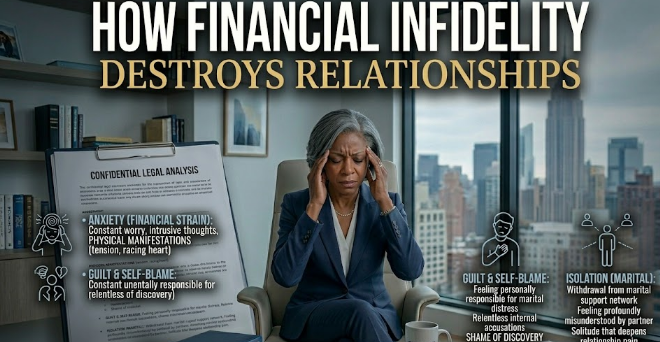

If you’ve ever discovered your partner secretly maxed out a credit card, hid a bank account, or lied about a big purchase, you’ve felt the punch of financial infidelity. It’s not just about money; it’s a betrayal that can shatter trust, intimacy, and the foundation of your relationship faster than almost anything else. In many couples, one partner hides accounts, debts, or big buys, turning “our” finances into “yours” and “mine” behind closed doors. This article dives deep into how financial infidelity sneaks in, wrecks bonds, and leaves emotional scars complete with real-life examples, a handy table of red flags, and ways to rebuild trust. Read on if you’re curious about protecting your love from secret spending sprees.
What Is Financial Infidelity, Really
Financial infidelity isn’t just cheating on your budget; it’s secrecy around money that breaks trust. It happens when one partner hides accounts, debts, or big purchases, ignoring shared goals like savings or debt payoff. This includes sneaky things like secret shopping apps, undisclosed gambling, or falsifying numbers on joint budgets. Unlike emotional cheating, it targets your shared future dreams of a home, kids, or retirement. When you discover it, you feel duped, disrespected, and terrified for your security.
Many people justify it with “I didn’t want to worry them” or “I’ll fix it,” but it builds resentment and power imbalances. One person feels like the controller, the other like the secret keeper. This kind of behavior can destroy intimacy, communication, and long term plans just as much as any emotional affair.How Money Secrets Creep Into Your Relationship
Financial infidelity often starts innocently, like a coffee run blamed on “work,” or a “surprise” gift that wipes out savings. Over time, it escalates: hidden payment apps, side‑hustle income funneled into personal spending, or secret loans taken out in one partner’s name.
Partners sometimes avoid talking about money because it feels awkward or stressful. When no one broaches the topic, assumptions and mistrust grow. One person assumes the other is frivolous, while the other feels judged or controlled. This avoidance leads to:
- Dodging budget conversations
- Changing the subject when bills come up
- Letting “little lies” pile up
Before long, small secrets turn into a pattern of financial dishonesty that erodes the relationship from the inside.
Why It Feels Like Emotional Betrayal
Money ties into our deepest insecurities our sense of security, self worth, and future dreams. When your partner hides spending, it can sound like:
- “You don’t care about us.”
- “I’m not enough.”
- “You don’t trust me.”
This is why discovering financial infidelity often feels like an emotional betrayal, not just a money problem. It strikes at the core of how safe and respected you feel in the relationship.
Trust, once damaged, doesn’t bounce back easily. You might find yourself:
- Checking bank accounts or statements more often
- Feeling hurt when a purchase isn’t discussed
- Questioning your partner’s judgment or intentions
Over time, these feelings can turn into resentment, distance in the relationship, and even thoughts about whether the relationship can survive.
The Emotional Toll: Anxiety, Guilt, and Isolation
When someone is hiding money habits, they often feel:
- Guilty, but afraid to come clean
- Ashamed, especially if they’ve broken budget rules
- Anxious about being discovered
These emotions are exhausting. The person hiding money might:
- Avoid social events or dinners out because they feel like a fraud
- Lose sleep worrying about how and when to confess
- Feel isolated, like they’re living a double life
On the receiving end, the betrayed partner may experience:
- Betrayal, confusion, and anger
- Anxiety about the future and financial security
- Feelings of isolation, like “I should’ve known” or “I’m not good enough”
These emotional side effects can damage mental health, physical health, and the relationship’s overall well‑being.
Spotting the Red Flags: A Quick Table
If you’re worried about financial infidelity in your relationship, here’s a table to help you identify warning signs. If several of these sound familiar, it’s worth having an honest conversation.
| Red Flag | What It Looks Like | Why It’s Dangerous |
|---|---|---|
| Secret accounts or apps | One partner has a bank or payment app the other doesn’t know about. | Erodes trust and creates secrecy. |
| Unexplained charges | “Unknown” or “misc.” expenses on joint accounts. | Could signal hidden spending or gambling. |
| Avoiding money talks | Changing the subject or leaving the room when bills come up. | Builds resentment and assumption. |
| Excessive gifts or self‑spend | Surprise items bought “just because” that strain the budget. | Undermines shared goals and trust. |
| Blaming or shaming | “You’re the reason we’re broke!” or “You’re too tight.” | Turns “us vs. problem” into “you vs. me.” |
| Reduced intimacy or sex | Feeling disconnected or uninterested after money fights. | Drains emotional and physical closeness. |
| Future plans on hold | No talks about house, kids, or trips because of money stress. | Kills hope and shared dreams. |
| Physical or emotional symptoms | Anxiety attacks, insomnia, or constant stress over money. | Harms health and relationship stability. |
If you relate with several of these, it’s important not to panic but it is time to open an honest, blame‑free conversation.
Power Struggles and Control: Who’s Really in Charge
Financial infidelity often ties into power imbalances. One partner might:
- Handle most of the money and make all the decisions
- Treat the other like a child with an “allowance”
- Shame or guilt‑trip the other for how they spend
This kind of dynamic can lead to resentment, especially if:
- One partner feels like their income isn’t respected
- One feels like they’re not trusted with money
- One secretly hides spending to regain a sense of control
When money becomes a tool for control or rebellion, financial infidelity is more likely to appear. Transparency and shared responsibility reduce these risks.
Real‑Life Scenarios: How This Plays Out
In many couples, financial infidelity doesn’t start with a grand plan it builds slowly.
- The secret spender: One partner uses a side‑hustle income to buy online gadgets or clothes without telling the other, rationalizing, “It’s my own money.”
- The hidden debt collector: One partner racks up secret credit card balances or payday loans, then hides the statements in fear of a fight.
- The “surprise” shopper: One partner buys expensive gifts or trips, telling the other later, “It’ll be fine, we’ll figure it out.”
In each case, the short‑term relief is outweighed by long‑term damage. When the truth finally comes out, the other partner often feels like the rug was pulled out from under them and that can be very hard to recover from.
Quick Action Plan Table: Rebuilding After Financial Infidelity
If financial infidelity has hit your relationship, it takes time and teamwork to repair things. Here’s a simple plan you can follow together.
| Step | Action Item | Why It Helps |
|---|---|---|
| 1 | Have an honest, no‑blame confession about hidden debts or spending. | Breaks the secrecy and starts the healing process. |
| 2 | Create a joint budget and track all income and expenses. | Builds transparency and shared responsibility. |
| 3 | Set up a small emergency fund together. | Reduces panic and financial stress. |
| 4 | Agree on “no‑secret” rules for accounts and cards. | Rebuilds trust with clear boundaries. |
| 5 | Schedule regular “money dates” to review finances. | Keeps communication open and reduces tension. |
| 6 | Seek help from a financial counselor or therapist if needed. | Offers guidance and emotional support. |
You don’t have to fix everything overnight. Just start with one step, then build from there.
Read more: The True Cost of Divorce in the US & UK
How to Prevent Financial Infidelity
Prevention is easier than repair. Here are practical ways to keep money healthy:
- Talk early and often about money values
What does money mean to each of you? Is it security, freedom, fun, or status? - Create shared goals
Save together for a vacation, home deposit, or emergency fund instead of living hand‑to‑mouth. - Use tools that support transparency
Try a simple budgeting app or a shared spreadsheet so both partners can see numbers clearly. - Respect each other’s money boundaries
If one partner wants to keep a small “fun fund” for personal spending, agree on the amount and the rules. - Address small lies quickly
If one partner hides a small expense, use it as a conversation starter, not a reason to escalate into a fight.
Healthy money habits, combined with honesty and respect, can prevent financial infidelity from taking root.
Final Thoughts: Love vs. Money Lies
Financial infidelity can destroy relationships by turning “we’re in this together” into “you hid this from me.” However, it doesn’t have to be the end of your love story. With honesty, accountability, and teamwork, couples can rebuild trust and create a healthier money culture.
If you’ve experienced financial infidelity, remember: it’s never too late to reset, communicate, and start fresh. Money comes and goes, but real connection is built on truth, not secrecy.
What’s your biggest money‑trust trigger, or have you turned things around? Share your thoughts below I’d love to hear your story.